Referral Programs That Actually Work - Implementation Guide
Learn how to build and optimize referral programs that drive growth. Complete guide with metrics, incentives, and automation strategies.
Referral programs are one of the most cost-effective growth channels. A well-designed referral program can reduce customer acquisition costs by up to 70% while bringing in higher-quality customers.
But most referral programs fail because they're poorly designed, hard to use, or offer weak incentives.
This guide will show you how to build a referral program that actually works — with real examples, metrics, and implementation strategies.
Why Referral Programs Work
The Psychology Behind Referrals
People trust recommendations from friends and family 92% more than any form of advertising.
Key principles:
- Social Proof: "My friend uses this, so it must be good"
- Reciprocity: Rewarding both referrer and referee creates a win-win
- Status: Some people enjoy being early adopters who share discoveries
- Self-Interest: Incentives motivate sharing
Business Benefits
For you:
- Lower customer acquisition cost (CAC)
- Higher customer lifetime value (LTV)
- Better retention rates
- Faster growth compounding
Statistics:
- Referred customers have a 37% higher retention rate
- Referral marketing generates 3-5x higher conversion rates than other channels
- 83% of satisfied customers are willing to refer, but only 29% actually do (incentives fix this)
Essential Elements of a Successful Referral Program
1. Simple, Clear Mechanics
Bad referral flow:
Sign up → Navigate to settings → Find referral tab → Copy link →
Manually share → Friend signs up → Email support to claim reward
Good referral flow:
Dashboard → Click "Invite Friends" → One-click share (email/social/link) →
Friend signs up → Automatic reward
Key principle: Reduce friction at every step.
2. Compelling Incentives
The incentive must be valuable enough to motivate action.
Common incentive structures:
A. Two-Sided Rewards (Both Get Something)
Best for: Most SaaS products and services
Referrer gets: $25 credit
Referee gets: $25 credit
Why it works: Creates alignment. The referee has an incentive to actually use the product.
Example: Dropbox
- Referrer gets 500MB extra storage
- Referee gets 500MB extra storage
- Result: 3900% growth in 15 months
B. Percentage Discounts
Best for: Subscription services
Referrer gets: 1 month free for each referral
Referee gets: 20% off first month
Example: LikeDo
- Referrer gets 50 credits
- Referee gets 25 credits
- Credits never expire (for paid users)
C. Cash Rewards
Best for: High-value products or B2B
Referrer gets: $100 cash per paid customer
Referee gets: Free trial + discount
Example: Some SaaS tools
- $500 for each enterprise customer referred
- Paid out after customer stays for 3 months
D. Tiered Rewards
Best for: Creating power users
1-5 referrals: $10 each
6-20 referrals: $15 each
21+ referrals: $25 each
Why it works: Gamification encourages users to refer more.
3. Easy Sharing Mechanisms
Provide multiple ways to share:
Must-haves:
- Unique referral link (e.g.,
like.do/ref/john) - One-click email invite
- Social media sharing (Twitter, LinkedIn, Facebook)
- Copy-to-clipboard button
Nice-to-haves:
- QR code for in-person sharing
- WhatsApp/Telegram direct sharing
- Pre-written message templates
- Embeddable referral widget
4. Transparent Tracking
Users must be able to see:
- How many people they've referred
- How many have signed up
- How many have converted (if required)
- Total rewards earned
- Pending vs. claimed rewards
Example dashboard:
Referrals Overview
━━━━━━━━━━━━━━━━━━
Total invites sent:     45
Sign-ups:              12
Qualified referrals:    8
Total rewards earned:  $200
Pending:               $50
5. Anti-Fraud Measures
Prevent abuse while keeping the program accessible:
Common fraud tactics:
- Self-referrals (referring yourself with different emails)
- Fake sign-ups that never convert
- Bot-generated referrals
Prevention strategies:
- Require email verification
- Require minimum activity level (e.g., create 3 links, upload 1 file)
- Delay reward until referee stays active for X days
- Limit referrals per day/week
- Block disposable email domains
- Track IP addresses and device fingerprints
LikeDo's approach:
referral: {
  enable: true,
  inviterReward: {
    credits: 50,
    expireDays: 365,
  },
  inviteeReward: {
    credits: 25,
    expireDays: 365,
  },
  maxInvitesPerDay: 20,
  requireEmailVerification: true,
}
Implementation Strategies
Step 1: Define Your Goal
What do you want?
- More sign-ups?
- More paid conversions?
- More active users?
- More social shares?
Example goals:
- "Increase paid conversions by 25% this quarter"
- "Acquire 1,000 new users through referrals"
- "Reduce CAC from $50 to $30"
Step 2: Choose Your Incentive
Consider:
- Your margins (can you afford the incentive?)
- Customer LTV (how much is a new customer worth?)
- What motivates your users (money? features? status?)
Formula:
Max referral reward = (Customer LTV × 0.3) - Cost of reward fulfillmentExample: If your customer LTV is $300 and fulfillment costs $10:
Max reward = ($300 × 0.3) - $10 = $80You can afford to give up to $80 in rewards per referral.
Step 3: Build the Technical Infrastructure
Required components:
A. Unique Referral Links
// Generate unique referral code
function generateReferralCode(userId) {
  const hash = crypto.createHash('md5')
    .update(userId + Date.now())
    .digest('hex');
  return hash.substring(0, 8);
}

// Create referral URL
const referralUrl = `https://like.do/ref/${referralCode}`;
B. Referral Tracking
// Track referral sign-up
async function trackReferral(referralCode, newUserId) {
  const referrer = await getUserByReferralCode(referralCode);

  if (!referrer) return;

  await db.referrals.create({
    referrerId: referrer.id,
    refereeId: newUserId,
    status: 'pending', // pending → qualified → rewarded
    createdAt: new Date()
  });
}
C. Reward Distribution
// Award credits when referee qualifies
async function qualifyReferral(referralId) {
  const referral = await db.referrals.findById(referralId);

  // Award referrer
  await addCredits(referral.referrerId, 50, '365d');

  // Award referee
  await addCredits(referral.refereeId, 25, '365d');

  // Update referral status
  await db.referrals.update(referralId, { status: 'rewarded' });
}
Step 4: Design the User Experience
Referral page elements:
- Headline: "Give $25, Get $25"
- Explainer: "Invite friends and you'll both get $25 in credits"
- Referral link: Prominently displayed with copy button
- Sharing options: Email, Twitter, LinkedIn, WhatsApp
- Stats: Show current referrals and earnings
- FAQ: Answer common questions
Example layout:
┌─────────────────────────────────────┐
│  Invite Friends, Earn Credits       │
│                                     │
│  Your unique link:                  │
│  ┌──────────────────────────────┐  │
│  │ https://like.do/ref/abc123   │  │
│  │                        [Copy]│  │
│  └──────────────────────────────┘  │
│                                     │
│  Share via:                         │
│  [Email] [Twitter] [LinkedIn]       │
│                                     │
│  ┌──────────────────────────────┐  │
│  │ Total Invites:     12        │  │
│  │ Qualified:          8        │  │
│  │ Rewards Earned:  $200        │  │
│  └──────────────────────────────┘  │
└─────────────────────────────────────┘
Step 5: Promote Your Referral Program
In-app placements:
- Dashboard widget
- Post-sign-up onboarding flow
- Settings page
- Confirmation emails
- Empty states
Email campaigns:
- Welcome email: "Invite 3 friends and get $50"
- Weekly digest: "You've earned $25 — share to earn more!"
- Re-engagement: "We miss you! Invite a friend and both get 50% off"
Other channels:
- Blog post announcing the program
- Social media posts
- In-app notifications/banners
- Customer support signature
Optimizing Your Referral Program
Key Metrics to Track
1. Invitation Rate
Invitation Rate = (Users who sent invites / Total users) × 100Target: 20-30%
2. Conversion Rate
Conversion Rate = (Invites who signed up / Total invites) × 100Target: 15-25%
3. Qualification Rate
Qualification Rate = (Qualified referrals / Sign-ups from referrals) × 100Target: 60-80%
4. Viral Coefficient
Viral Coefficient = (Avg referrals per user) × (Conversion rate)Target: > 1.0 (exponential growth)
5. Cost Per Acquisition
CAC (Referral) = Total referral rewards / New customers acquiredCompare to other channels (should be 50-70% lower)
A/B Testing Ideas
Test different incentives:
- $25 cash vs. 1 month free
- Two-sided vs. one-sided rewards
- Flat rewards vs. tiered rewards
Test messaging:
- "Give $25, Get $25" vs. "Invite Friends, Earn Rewards"
- Emphasize altruism vs. self-interest
- Short copy vs. detailed copy
Test placement:
- Referral widget in dashboard vs. dedicated page
- Prompt timing (immediately vs. after first success)
Test sharing methods:
- Email vs. social media vs. direct link
- Pre-written messages vs. custom messages
Advanced Referral Strategies
1. Time-Limited Campaigns
Create urgency with limited-time bonus rewards:
🔥 Double Referral Rewards This Week!
Normally: $25 per referral
This week only: $50 per referral
Ends Friday!Result: 3-5x spike in referral activity during campaign
2. Milestone Challenges
Gamify referrals with achievement unlocks:
Referral Challenges
━━━━━━━━━━━━━━━━━━
[✓] Invite 1 friend    → $10 bonus
[✓] Invite 5 friends   → $30 bonus
[ ] Invite 10 friends  → $75 bonus + Premium badge
[ ] Invite 25 friends  → $200 bonus + Lifetime Premium
3. Leaderboards
Tap into competitive spirit:
Top Referrers This Month
━━━━━━━━━━━━━━━━━━━━━━
1. @john_doe       45 referrals
2. @jane_smith     38 referrals
3. @alex_chen      32 referrals

You're ranked #47 with 8 referrals
Refer 2 more to break into top 40!
4. Partner Referrals
Team up with complementary services:
Example:
- Link shortener partners with email marketing tool
- Users of Tool A get bonus for referring users to Tool B
- Both companies benefit from cross-promotion
Real-World Case Studies
Case Study 1: Dropbox
Program:
- Two-sided reward: Extra storage for both parties
- Simple one-click sharing
- Visible progress tracking
Results:
- 3900% growth in 15 months
- 35% of daily sign-ups from referrals
- Reduced marketing spend from 90% to 10% of budget
Case Study 2: Airbnb
Program:
- Host refers guest: Both get travel credit
- Guest refers guest: Both get travel credit
- Localized incentives ($25 in US, €15 in Europe)
Results:
- 25% of new customers from referrals
- Exponential growth in early years
- Now a $100B+ company
Case Study 3: Tesla
Program:
- Early program: Free Supercharging for both parties
- Later: Credits toward accessories
- Exclusive access to new features/events
Results:
- Millions in free marketing
- Created brand evangelists
- Lower CAC than traditional auto advertising
Common Mistakes to Avoid
1. Weak Incentives
"Refer a friend and get 5% off!" Problem: Not compelling enough to motivate action Fix: Offer substantial value (at least 15-20% of product value)
2. Complex Qualification Rules
"Referral must sign up, verify email, create 5 links, and stay active for 30 days" Problem: Too many hoops to jump through Fix: Simplify to 1-2 qualification steps maximum
3. Delayed Rewards
"You'll receive your reward after your friend's 3rd month subscription" Problem: Too long to wait, users forget or lose interest Fix: Instant or near-instant rewards (within 24-48 hours)
4. Hidden Referral Program
Referral page buried in settings, no promotion Problem: Nobody knows about it Fix: Prominently feature in dashboard, onboarding, emails
5. No Tracking/Transparency
Users can't see their referral stats Problem: No motivation to continue referring Fix: Clear dashboard showing all referral activity
Implementing Referrals with LikeDo
LikeDo includes a built-in referral system:
// From your config/website.tsx
referral: {
  enable: true,
  inviterReward: {
    credits: 50,
    expireDays: 365,
  },
  inviteeReward: {
    credits: 25,
    expireDays: 365,
  },
  maxInvitesPerDay: 20,
  requireEmailVerification: true,
}
Features:
- Automatic unique referral links for each user
- Credit-based rewards
- Email verification requirement
- Anti-fraud rate limiting
- Built-in tracking dashboard
Conclusion
A well-executed referral program can become your #1 growth channel. The key is to:
- Make it stupid simple to refer
- Offer compelling two-sided rewards
- Track everything transparently
- Prevent fraud without adding friction
- Promote the program actively
Start with a basic referral program and iterate based on data. Test different incentives, messaging, and placements until you find what works for your audience.
The best time to start a referral program was at launch. The second best time is now.
👉 Start building your referral program
Turn your customers into your best marketing channel.
Author

Categories
More Posts
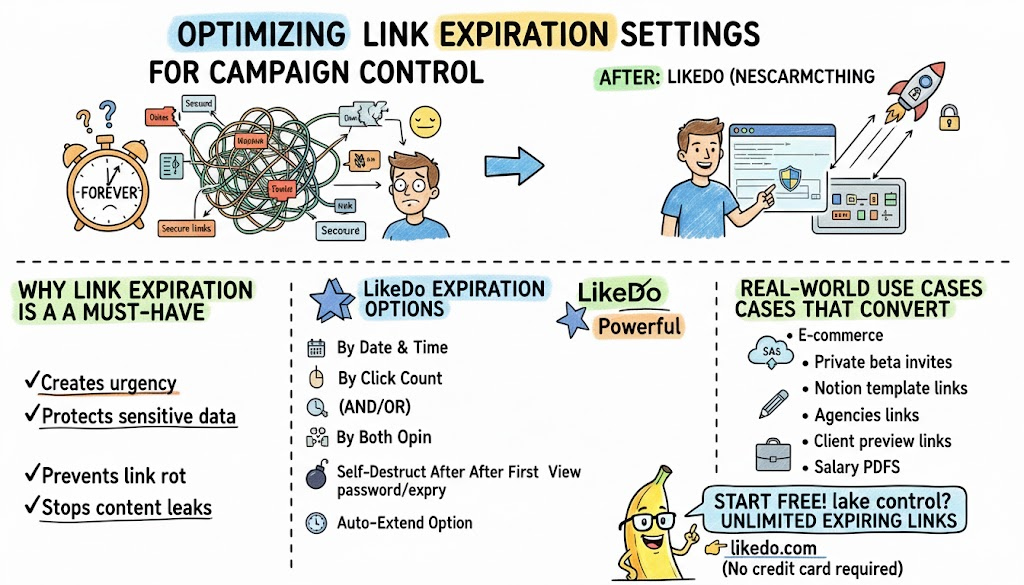
Optimizing Link Expiration Settings for Better Campaign Control
Master expiring links, password-protected links, and auto-delete features to run limited-time offers, secure file sharing, and private campaigns with full control.
Social Media Marketing with Short Links - Ultimate Strategy Guide
Master social media marketing with strategic short link usage. Learn platform-specific tactics, tracking methods, and proven strategies to boost engagement and ROI.
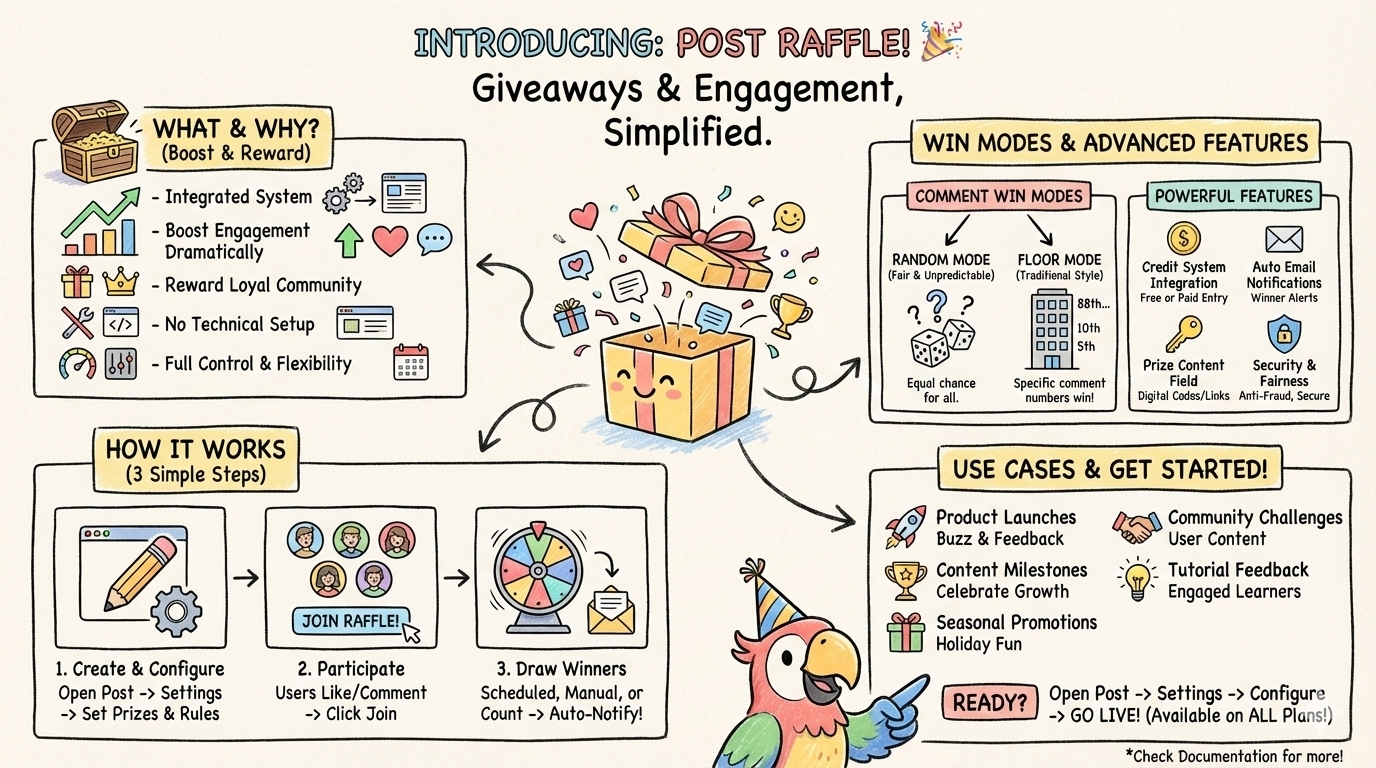
Introducing Post Raffle - Boost Engagement and Reward Your Readers
Create interactive raffles directly within your posts to increase engagement, reward loyal readers, and build a thriving community around your content.
Newsletter
Join the community
Subscribe to our newsletter for the latest news and updates